
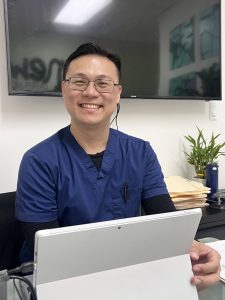
Dr. William Lin L.Ac
Written and clinically reviewed by Dr. William Lin L.Ac.
Licensed Acupuncturist, State of California — License No. 19748.
Master of Science, Traditional Chinese Medicine and Chinese Herbology, South Baylo University.
Last reviewed: October 01, 2026
There’s a category of complaint people stop bringing up. The bloating after most meals. The stomach that’s been unpredictable for years. Getting sick every time something goes around the office. Being tired in a way that sleep doesn’t fix.
None of it is dramatic enough to push someone into a specialist’s office, and most of it has already been checked once and come back clear. So people adapt. They work out which foods to avoid, they plan around it, and they stop mentioning it.
This is a large part of what I treat, and it’s one of the areas Chinese medicine is best suited to — because it was built to work with exactly this kind of problem: persistent, systemic, and not reducible to one thing on a test result.
How Does Chinese Medicine Treat Digestive Problems?
In Chinese medicine, digestion isn’t just what happens in your stomach. It’s the process of taking in what your body needs and moving it where it has to go, and almost everything else depends on it working properly. When that process is struggling, it shows up in obvious ways — bloating, irregularity, reflux — and in less obvious ones, like low energy, poor sleep, or catching everything that goes around.
That’s why I’ll ask about your energy and your sleep when you’ve come in about your stomach. They’re connected on the way in. A body that isn’t extracting what it needs from food doesn’t have much left over for repair, defense, or getting through the afternoon.
The same logic runs the other way. When someone comes to me exhausted and run-down with no clear cause, digestion is one of the first places I look — often before anything else.
So I treat the system, not the symptom. Two people with the same bloating can have very different things driving it, and the treatment follows what I find rather than what it’s called. That’s also why this area responds well to treatment over a course of visits rather than a single one — you’re changing how a process works, not switching something off.
What Digestive and Internal Health Symptoms Do I Treat?
Digestive Symptoms
- Bloating, gas, and discomfort after eating
- Irregularity in either direction, and stomachs that alternate unpredictably
- Acid reflux and heartburn
- Nausea
- Appetite that's dropped off, or hunger that never quite settles
- Cramping and abdominal discomfort
- Symptoms you've been told are irritable bowel
Internal and Immune Symptoms
- Frequent colds and catching everything that goes around
- Seasonal allergies, congestion, and sinus pressure
- Fatigue that sleep doesn't resolve
- Feeling run-down for months without a clear reason
- Recovery after illness, surgery, or a long stretch of stress
A word about what I need you to do first. If you have digestive symptoms you haven’t had assessed by a physician — particularly bleeding, unexplained weight loss, persistent pain, difficulty swallowing, or a change that came on suddenly — please get that looked at before you come to me. I’ll tell you the same thing if you book anyway. There are things that need ruling out, and I’m not the person to rule them out.
What Happens at a Digestive and Internal Health Visit?
1. You arrive and check in.
The front desk handles the paperwork and you’re taken through to an exam room.
2. We talk first, and it's detailed.
Digestion is where the questions get most specific, because the answers point in very different directions. Whether symptoms come on right after eating or hours later tells me whether I’m looking at the food itself or at how your body is processing it. Whether it’s worse when you’re stressed tells me how much your nervous system is involved. Your appetite, your thirst, and yes, your stools, tell me how well the whole process is actually working.
Some of that is uncomfortable to talk about. None of it is new to me, and it’s genuinely the most useful information you can give me.
Then I’ll ask about the rest of the system — energy, sleep, how often you get sick, whether you run hot or cold. In Chinese medicine these aren’t separate from digestion. A body that isn’t drawing what it needs from food has less left for energy, repair and fighting things off, so a patient who comes in for bloating and mentions catching every cold going round is often telling me one story, not two.
3. I examine your pulse and tongue, and share my thoughts on how to treat your symptoms.
For digestive complaints the tongue is the most useful thing I look at. Its coating, color and shape tell me a great deal about what’s happening in the digestive system — often more directly than anything you can describe. On the day of your visit, try not to brush your tongue or eat anything strongly colored beforehand, like coffee or candy, since both change what I’d see.
The pulse fills in the rest. I read several positions on each wrist, and one of them in particular relates to digestion, so I’ll spend longer there. The whole examination takes about two minutes, and then I’ll tell you plainly what I’m seeing and what I want to do about it.
4. On the same day and during the same visit I treat you with therapies I find appropriate.
Depending on what your body needs, that may be acupuncture, acupressure, direct heat compress therapy, red light therapy, infrared therapy, herbal paste applied at specific points, or a combination. Digestive complaints very often respond to warmth, so heat is frequently part of the plan here — over the abdomen, or across the whole body where your energy and resistance are part of the picture.
5. You rest with the treatment in place.
I’ll leave you for a while so your body can absorb what’s been done. Don’t be surprised if your stomach starts moving or making noise while you’re resting — that’s common with digestive treatment and it’s usually a sign things are responding. A lot of people fall asleep.
6. After about 15 minutes, I come back and check.
I’ll ask what’s shifted — whether the fullness or pressure has eased, whether the cramping has let go, whether you feel lighter or warmer through the middle, whether anything feels different that you weren’t expecting. If something is still sitting there, say so and I’ll treat it before you get up.
7. Herbs, which matter more here than almost anywhere.
Digestive and internal complaints are where Chinese herbal medicine has some of its deepest tradition. Treatment in the room shifts things; a formula keeps that shift going through the days in between, which matters for a process that’s happening every time you eat. It comes as a powder, made for you and your symptoms, with instructions on exactly how and when to take it — often timed around meals. We review it a week later and adjust.
As for food and other daily habits, I’ll give you specific suggestions about what to eat, what to set aside for now, and when to eat it, matched to what I found rather than a general healthy-eating sheet. For digestion this often does as much as the treatment itself, because you’re eating several times a day and I’m seeing you once a week.
8. Before you leave
I’ll tell you whether another visit makes sense and roughly how many I think it will take. I’ll also ask you to keep an eye on a few specific things before next time — how you feel after meals, your energy through the afternoon, anything that changes with the herbs — so we can compare against something real rather than a general impression. If another visit makes sense, the front desk books it on your way out.
Is Acupuncture Worth Trying for Digestive Problems?
It probably is, if:
- Your symptoms have been there long enough that you've built your life around them
- You've had the tests and they came back clear, but nothing has actually changed
- Your digestion is clearly worse under stress
- Energy, sleep or getting sick often are part of the picture too
- You'd rather address how the system is working than keep managing the symptoms
It probably is NOT, if:
- You have symptoms that haven't been assessed by a physician — please get that done first
- You have a diagnosed condition that needs medical management. I can work alongside that treatment, but not in place of it.
- You want something to take without being examined first
If this isn’t something I can help with, I’ll tell you. And if I think something needs a physician’s attention, I’ll say that rather than treat around it.
Please tell me everything you’re taking — prescriptions, over-the-counter medication, vitamins and supplements — at the first visit. Chinese herbs are medicine and they can interact with other medicine. Keep your physician informed that you’re taking them.
How much does it cost to treat these symptoms?
That depends on what we’re treating and how long it takes, but here’s what the individual pieces cost so you can work it out.
Our pricing at Well Family Care Corp.
First Visit (Full Intake, Examination, Diagnosis, & Treatment)
Follow-Up Visits (May be covered by Insurance)
Herbal formulas
Payment is taken at the time of your visit, and we check your insurance before your first appointment so you know what it covers.
How many visits it usually takes.
Digestive complaints that have been around for years generally take a course of treatment rather than a session or two — you’re changing how a process works. I’ll give you a realistic number at the first visit and revise it as we go, so you can plan rather than commit open-ended.
Whether herbs are part of it.
In this area, usually yes. Herbal medicine is often the more powerful half of the treatment for digestive and internal complaints, and it keeps working between visits. Herbs are paid for separately and insurance doesn’t cover them — that’s true of essentially every plan, not just ours. A formula usually lasts several weeks, and I’ll tell you what it costs before you commit to it.
What your insurance is likely to do.
Most plans don’t cover the initial Chinese medicine workup, though follow-up visits and therapies often are. What’s covered can also depend on what’s being treated, and it varies enough between plans that guessing isn’t useful — which is why we check yours specifically before you come in.
We work with most major insurance plans and Medicare.
Questions I get Asked about your treatment for Digestive or Internal Health symptoms.
I've already had tests and they came back normal. Is there any point?
Often that’s exactly the situation where I can help. A clear test tells you nothing structural is wrong, which is worth knowing — but it doesn’t explain why you feel the way you do. Chinese medicine assesses how a system is functioning rather than whether it’s damaged, so it tends to be useful precisely when the tests are clean.
Do I have to change my diet?
I’ll usually suggest some changes, and I’ll tell you why rather than just handing you a list. They’re normally specific and temporary rather than permanent restrictions. How far you take that is up to you.
Will herbs upset my stomach?
They shouldn’t — and if a formula doesn’t sit well with you, tell me and I’ll change it. That’s part of why we review it after a week. A formula that isn’t comfortable to take isn’t going to get taken.
Can I keep taking my medication?
Usually, but that’s a decision I make with your list in front of me rather than a blanket answer. Bring everything to the first visit, supplements included, and keep your physician in the loop.
How long before I notice anything?
Digestive symptoms often shift earlier than people expect — sometimes within the first couple of weeks, particularly with herbs involved. Longer-standing patterns take longer to hold. I’ll tell you what to watch for and roughly when.
Do I need acupuncture, or would herbs be enough?
Depends what I find. Some people do well on herbs alone, some need both, and I’ll tell you what I think rather than default to everything.
Come In and we'll talk about your treatment plan
If you’re not sure acupuncture is right for what’s going on, I’d rather have that conversation before you book than after. Call either office, or send a request and we’ll get back to you.
Pico Rivera · 6505 Rosemead Blvd, Ste 200, Pico Rivera, CA 90660
Chino · 15338 Central Ave, Chino, CA 91710
Wishing you many healthy and happy days,
— Dr. William Lin, L.Ac.