
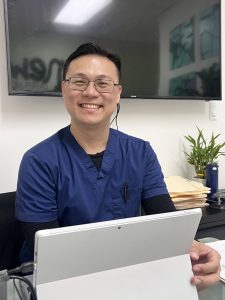
Dr. William Lin L.Ac
Written and clinically reviewed by Dr. William Lin L.Ac.
Licensed Acupuncturist, State of California — License No. 19748.
Master of Science, Traditional Chinese Medicine and Chinese Herbology, South Baylo University.
Last reviewed: October 01, 2026
A lot of the women who come to see me have been told some version of the same thing: that their cycles are just like that, that the cramping is normal, that the tiredness is stress, that nothing is wrong. Sometimes nothing is wrong in the sense that a test would show. That doesn’t mean it’s nothing.
Chinese medicine has treated menstrual, reproductive and hormonal concerns for a very long time — long enough that this is one of its deepest areas, not a modern add-on. And because Traditional Chinese Medicine (TCM) looks at the whole system rather than one organ, it tends to be useful for exactly the complaints that don’t resolve into a single diagnosis.
How I Think About Women's Health & Concerns
In Chinese medicine the body works through channels that circulation and energy move along. When something in that system gets blocked or runs short, it shows up wherever that channel is under the most strain. In women’s health that often means the cycle — because the cycle is sensitive, and it tends to register a problem before anything else does.
That’s why I’ll ask about your sleep, your digestion, your energy and your stress when you’ve come in about your periods. Those aren’t separate topics. A cycle that’s painful, irregular or heavy is usually telling me something about the system behind it, and treating the system is what makes the change hold.
It’s also why the same treatment can help with cramping, with sleep, and with the general worn-down feeling underneath both. I’m not treating three things. I’m treating what they have in common.
Treatment is often timed to your cycle. Where you are in the month changes what I’m working on, so I may ask you to come in at particular points rather than on a fixed weekly schedule. I’ll explain that at the first visit so you can plan around it.
People come see me when they start having these symptoms
- Painful periods and cramping
- Irregular, absent, heavy or unpredictable cycles
- Premenstrual symptoms — mood, breast tenderness, headaches, bloating
- Fertility support, including alongside treatment you're having elsewhere
- Postpartum recovery, fatigue and low mood
- Perimenopause and menopause — hot flashes, night sweats, disrupted sleep, mood changes
- Hormonal headaches and migraines
- Recurring fatigue that nobody has been able to explain
- & other unexplainable pain or symptoms
About fertility, specifically. I treat a lot of people who are trying to conceive, and many of them are also under the care of a fertility specialist. What I’m doing is supporting your body’s overall function — circulation, cycle regularity, sleep, and the stress load that a fertility journey puts on a person. What I won’t do is tell you acupuncture makes you more likely to conceive or improves the odds of a treatment cycle. I don’t think that’s a claim anyone should be making, and I’d be wary of a clinic that does.
If you’re working with a fertility clinic, tell me. I’d rather coordinate with what you’re doing than work around it.
About Acupressure
I want to be clear that this isn’t a lesser option. It’s the same points, the same diagnosis, the same thinking, worked with steady hand pressure and the bodywork that belongs to the same tradition. I use it with people who’d rather not be needled, people on blood thinners, and anyone who just wants to start gently. Some patients stay with it the whole way through. That’s completely fine.
What happens at your First Visit?
1. You arrive and check in.
The front desk handles the paperwork and you’re taken through to an exam room.
2. We talk first, properly.
You tell me what’s been going on. I’ll ask about your cycle in detail — timing, flow, pain, what changes and when — along with sleep, digestion, energy, temperature and stress. Some of it is personal and some of it may feel unrelated. It isn’t. I need the full picture to work out what’s driving things.
3. I examine your pulse and tongue, and share my thoughts on how to treat your symptoms.
Patients find this the strangest part of the visit, so here’s what’s actually happening. I feel your pulse at several positions on each wrist, and I’m not counting beats — I’m reading qualities. Whether it runs deep or close to the surface. Whether it feels drawn tight like a wire, or thin enough that it’s easy to lose. Each position tells me about a different part of the system.
The tongue tells me a different set of things — color, shape, whether there’s a coating and where it sits.
Together they give me information I can’t get by asking questions, and in women’s health they matter more than usual. A lot of what I’m assessing is how well circulation is reaching where it needs to go and whether anything is holding it up. That tends to register here before it shows up anywhere else, which is also why I can sometimes tell you something about your cycle that you haven’t mentioned yet.
The whole examination takes about two minutes. Then I’ll tell you what I’m seeing, in plain language, and what I want to do about it — before anything begins.
4. After examining your pulse and tongue, I treat you, the same day.
Depending on what your body needs, that may be acupuncture, acupressure, direct heat compress therapy, red light therapy, infrared therapy, herbal paste applied at specific points, or a combination.
5. You rest with the treatment in place.
I’ll leave you for a while so your body can absorb what’s been done and settle into it. This isn’t downtime while I see someone else — the resting is part of how the treatment works, and cutting it short shortens the effect. The room stays quiet, and a lot of people fall asleep, which I take as a good sign rather than an interruption.
6. Then I come back and we check.
I’ll ask what’s shifted since we started — whether the tightness has let go, whether the ache has moved or eased, whether anything feels different that you weren’t expecting. You know your own body better than I do, so if something is still sitting there, say so. I’d rather treat it while you’re still on the table than have you notice it halfway home.
7. Herbs, where they'll help.
Herbal medicine does particularly well in this area, and I’ll often prescribe a formula to carry the treatment through the weeks between visits. It comes as a powder, made for you and your symptoms, with instructions on exactly how to take it. We review it a week later and adjust.
8. Before you leave
I’ll tell you what I think comes next — whether another session makes sense, roughly how many it’s likely to take, and where in your cycle it’s best to come back, since for a lot of what I treat the timing matters as much as the treatment itself. If I don’t think you need to come back, I’ll tell you that instead.
You’ll also leave knowing what to watch for between now and then. That might be a change in your cycle, in your sleep, or in how you feel in the days before your period — and it gives us both something concrete to compare against next time rather than relying on memory.
If another visit makes sense, the front desk books it on your way out and takes care of anything outstanding, so you’re not chasing an appointment later.
Is Acupuncture Worth Trying for Your Cycle, Fertility, or Menopause?
It probably is, if:
- Your cycle is painful, irregular or unpredictable and you've been told that's just how it is
- You've been through the tests and nothing came back, but you still don't feel right
- You're going through perimenopause or menopause and want something alongside, or instead of, what you've been offered
- You're trying to conceive and want support for your overall health through it
- You'd rather not be needled — a plan can be built around acupressure and herbs
It probably is NOT, if:
- You have bleeding, pain or symptoms you haven't had assessed by a physician. Please get that looked at first — I'll tell you the same thing if you come in.
- You're looking for a fertility treatment rather than support alongside one
- You want something to take without being examined first
How much does it cost to treat these symptoms?
That depends on what we’re treating and how long it takes, but here’s what the individual pieces cost so you can work it out.
Our pricing at Well Family Care Corp.
First Visit (Full Intake, Examination, Diagnosis, & Treatment)
Follow-Up Visits (May be covered by Insurance)
Herbal formulas
Payment is taken at the time of your visit, and we check your insurance before your first appointment so you know what it covers.
How many visits it usually takes.
For cycle-related concerns, treatment is measured in cycles rather than weeks — often two or three months before either of us can fairly judge how it’s going. So a realistic first course is the initial visit plus a handful of follow-ups timed to your cycle, not an open-ended weekly appointment. I’ll tell you at the first visit roughly how many that means and where in your month they fall, so you can work out the total in advance rather than a visit at a time.
Whether herbs are part of it.
Herbal medicine does particularly well with menstrual, hormonal and postpartum concerns, so there’s a good chance a formula will be part of your plan. Herbs are paid for separately and insurance doesn’t cover them — that’s true of essentially every plan, not just ours. A formula usually lasts several weeks, and I’ll tell you what it costs before you commit to it.
What your insurance is likely to do.
Most plans don’t cover the initial Chinese medicine workup, though follow-up visits and therapies often are. What’s covered can also depend on what’s being treated, and it varies enough between plans that guessing isn’t useful — which is why we check yours specifically before you come in rather than after.
We work with most major insurance plans and Medicare.
Questions I get Asked about your treatment
Do I have to come in at a particular time in my cycle?
Often, yes — for cycle-related concerns, where you are in the month changes what I’m treating. I’ll work out a schedule with you at the first visit. It’s usually less rigid than people fear.
Can I still come during my period?
Yes. For some concerns that’s exactly when I want to see you.
Is acupuncture safe during pregnancy?
It can be, and it’s used widely for pregnancy-related discomfort — but it has to be adapted, and there are points and approaches I avoid entirely. Tell me you’re pregnant, or might be, before we start.
Will it interfere with fertility treatment I'm having elsewhere?
Tell me what you’re doing and who’s treating you, and I’ll work alongside it. I’d rather coordinate than have you managing two practitioners who don’t know about each other.
Do I have to do the herbs?
No. Some people do acupuncture only. Herbs tend to help a lot in this area, so I’ll usually suggest them, but it’s your decision and I’ll tell you what I think either way.
How long before I notice a difference?
For cycle-related concerns people often notice something by the second or third cycle, because that’s the natural rhythm we’re working with. I’ll tell you what to watch for and roughly when, so you’re not guessing.
Come In and we'll talk about your treatment plan
If you’re not sure acupuncture is right for what’s going on, I’d rather have that conversation before you book than after. Call either office, or send a request and we’ll get back to you.
Pico Rivera · 6505 Rosemead Blvd, Ste 200, Pico Rivera, CA 90660
Chino · 15338 Central Ave, Chino, CA 91710
Wishing you many pain-free days,
— Dr. William Lin, L.Ac.